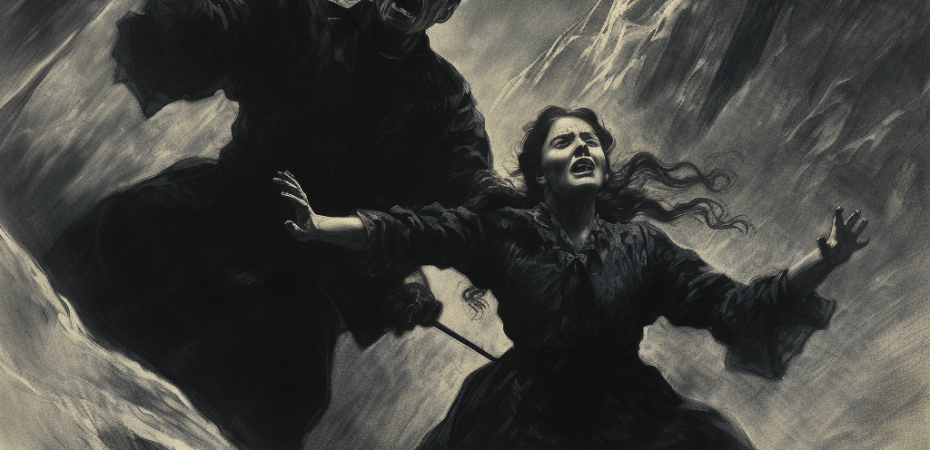
Where the Sardona Glacier now lies, there used to be the most beautiful alp of the whole valley; from its high terrace it looked out over the country. It belonged to the shepherd Segnes, who received it as a gift from his dying father on condition that he look after his mother. His house stood down in the valley. But Sardona, the shepherd’s mistress, a beautiful, rich girl who owned the Kratzere alp up on the Muttentaler ridge, also lived on the Rathausboden down there. The girl was very arrogant. The shepherd’s old mother didn’t like that, so she did everything she could to break off their love affair. In vain! The sultry eyes on the Rathausboden were more powerful than the mother’s word. The two lovers discussed how they could get the old woman out of the way.
When spring came, Segnes went up to the mountain pasture with his cattle. The mother could not follow him, for she was old and ill. But her food soon ran out, and the son stayed on the mountain pasture and did not allow her anything. How was she to continue to live? Filled with bitter sorrow, she decided to go to the mountain pasture if possible and to ask for help and care from her son. Slowly, close to death, she dragged herself up the mountain. But two fiery eyes have spied her; unnoticed, on hidden paths, Sardona crept after her.
The mother came to the hut and asked the son for a piece of bread; she also threatened him with God’s punishment because of his forgetfulness of duty and recklessness. With a sneer, the son fetched a bowl full of liquid manure from the “Scherm” and put it in front of his mother. She no longer complained, instead, with a deadly pain in her chest, she turned to go and die in the valley below.
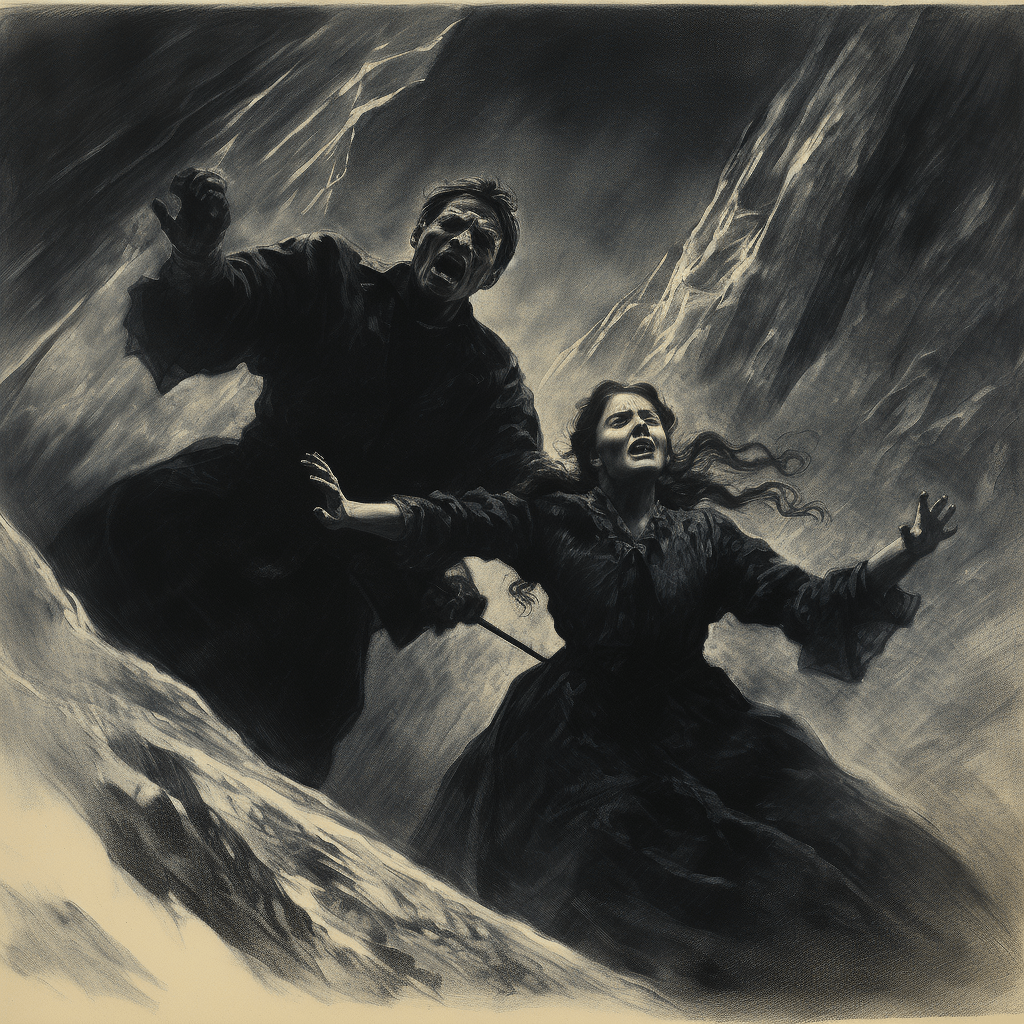
Just then the arrogant girl came striding proudly from Rathausboden and passed the pale old woman with disdain. Segnes sees his beloved coming, hurriedly fetched some cheese wheels from the cellar and laid them on the bride’s path so that she does not soil her shoes. Full of malice, he calls out to his mother: “That’s another visit!” But the mother turns around and says with her last strength: “So stay together forever and ever!”
As the mother has spoken it, heaven has heard it! It began to rain and rain all day and in the evening it begins to snow and snow all night. The next morning there was no hut and no flock to be seen; a huge glacier had covered everything living, and it still covers it today.
But every year, on the day of the sacrilege, a crevice opens up in the glacier, and the banished couple descend to its edge and implore their mother to take back the evil word. They listen and listen to all winds to hear if the redeeming voice can be heard. Time and again they have to return to the cold dungeon, and time and again the icy gates close.
Sometimes Sauren looks so gloomily into the land and shakes his snowy curls; then the avalanches tumble down over his forehead and thunder down to the glacier. He is unwilling that he should share the curse. In the dark of the night, the lamentations of the banished can be heard from the glacier. The foreign wanderer, of course, believes it to be the whistling of the wind in the pines and rock pinnacles or the crashing of the bursting ice; but the man who knows the land knows better and shudderingly remembers the guilt that demanded such punishment.
F. W. Sprecher, Yearbook, Alpine Club.
Editor’s Note: this is a variation of the previous story (245), but even more epic as it seems to be more clearly linked to explaining the names of the landscape features (see below). It could be easily re-written to go the other way where a fine young couple are eternally cursed by their jealous old matriarch.
On names and translations:
- “Rathausboden” (Council House Floor/Ground) may be the name of a specific field, which appears to have some ruins on it.
- Kratzere appears to be Chrazer.
- Muttentaler appears to be Muotatalergrat
- Sardona, the girl, is the name of the glacier and the peak
- Segnes, the boy, is the name of the glacier and the peak next to it
- Sauren, is a mysterious name that appears at the end of the story, but appears to be a version of Suren, which is the name of the ridge, or overall mountain, of which Sardona and Segnes are peaks.
Ewig verflucht
Wo heute der Sardonagletscher liegt, da war früher die schönste Alp des ganzen Tales; von der hohen Terrasse schaute sie über das Land. Sie gehörte dem Hirten Segnes, der sie vom sterbenden Vater unter der Bedingung geschenkt erhielt, dass er für die Mutter sorge. Sein Haus stand unten im Tale. Aber auf dem Rathausboden dort unten wohnte auch Sardona, die Geliebte des Sennen, ein schönes, reiches Mädchen, dem die Alp Kratzere droben am Muttentalergrat gehörte. Das Mädchen war hoffärtig über alle Massen. Das sah die alte Mutter des Hirten nicht gerne und bot daher alles auf, das Liebesverhältnis der beiden zu lösen. Vergeblich! Die schwarzen Augen auf dem Rathausboden waren mächtiger als der Mutter Wort. Die beiden Liebenden berieten, wie sie die Alte aus dem Wege schaffen könnten.
Als der Frühling ins Land zog, da stieg Segnes mit seinem Vieh zur Alp hinauf. Die Mutter konnte ihm nicht folgen; denn sie war alt und krank. Ihre Lebensmittel gingen aber bald aus, und der Sohn blieb auf der Alp und hielt ihr nichts zu. Wie sollte sie ihr Leben weiter fristen? Von bitterm Weh erfüllt, entschliesst sie sich, wenn möglich auf die Alp zu steigen und von dem Sohne Hilfe und Fürsorge zu verlangen. Langsam, dem Tode nahe, schleppte sie sich den Berg hinauf. Aber zwei feurige Augen haben sie erspäht; unbemerkt, auf verborgenen Pfaden, schleicht Sardona ihr nach. Die Mutter kommt zur Hütte und bittet den Sohn um ein Stückchen Brot; auch droht sie ihm mit der Strafe Gottes wegen seiner Pflicht-Vergessenheit und Ruchlosigkeit. Höhnend holt der Sohn vom “Scherm” herauf einen Napf voll Jauche und setzt diesen der Mutter vor. Sie klagt nun nicht mehr; den tödlichen Schmerz in der Brust, wendet sie sich zum Gehen, um im Tale unten zu sterben. Eben kommt das hoffärtige Mädchen vom Rathausboden stolz dahergeschritten und geht verächtlich an der bleichen Alten vorüber, Segnes sieht die Geliebte kommen, holt eilig einige Käslaibe aus dem Keller und legt sie der Braut auf den Weg, damit sie ihre Schuhe nicht beschmutze. Voll Bosheit ruft er noch der Mutter nach: “Das ist ein anderer Besuch!” Diese aber kehrt sich um und spricht mit ihrer letzten Kraft: “So bleibet immer und ewig beieinander!”
Die Mutter hat’s gesprochen, der Himmel hat’s gehört! Es fängt an zu regnen und regnet den ganzen Tag; am Abend fängt es an zu schneien und schneit die ganze Nacht hindurch. Am andern Morgen sah man keine Hütte und keine Herde mehr; ein gewaltiger Gletscher hatte alles Lebende bedeckt, und er bedeckt es heute noch. Alljährlich aber an dem Tage, da der Frevel geschehen, tut sich im Gletscher eine Spalte auf, und die Gebannten steigen herab an deren Rand und rufen flehentlich der Mutter, damit sie das böse Wort zurücknehme. Sie horchen und horchen nach allen Winden hinaus, ob sich die erlösende Stimme nicht hören lasse. Immer geschah es bisher vergeblich; immer wieder müssen sie zurückkehren in das kalte Verliess, und immer wieder schliessen sich die eisigen Pforten, – Mitunter schaut der Sauren so düster ins Land und schüttelt seine schneeigen Locken; dann stürzen die Lawinen über seine Stirn hernieder und donnern zum Gletscher herab. Er ist unwillig darüber, dass er den Fluch mittragen soll. In dunkler Wetternacht vernimmt man aus dem Gletscher heraus auch die Klagerufe der Gebannten. Der fremde Wanderer freilich glaubt, es sei das Pfeifen des Windes in den Tannen und Felszinken oder das Krachen des berstenden Eises; aber der Landeskundige weiss es besser und gedenkt schaudernd der Schuld, die solche Strafe gefordert.
F. W. Sprecher, Jahrbuch, Alpenklub.
 Tales from the Swiss Mountains / Märchen aus den Schweizer Bergen