
Updated 31 December 2021, huge thanks to a translations to High German by Martin Bölli and translation to English by @sammelsurium (see comments):
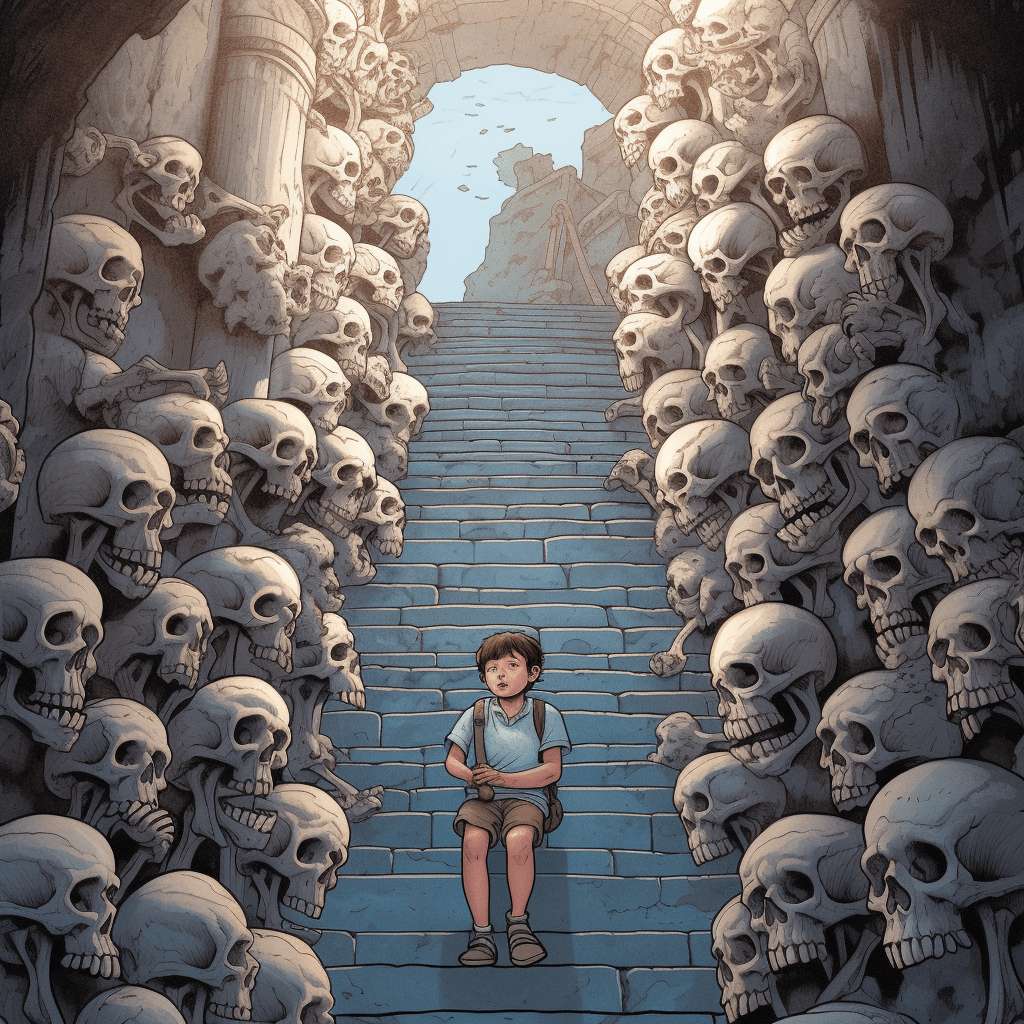
In Rapperswil there is an ossuary by the church where many skulls are stacked on top of each other. It is open and only a few steps down, and often children and other people go down there. Once a skull on the upper-most row started to rattle. A child saw this, ran outside in horror and called out to the people.
When they arrived downstairs, fearfully on tiptoes, the skulls were still bobbing. Finally, one of them took heart, went down and lifted the skull. And the rattling stopped. A mouse was trapped inside and jumped back and forth, wanted to get out and caused the rattling. A man from Rapperswil who was there told me that.
Skulls play a popular role in ghost stories. On 9 April 1388, the sexton saw the men of the church who had been slain in Näfels at night, each with his skull under his arm like a hat, walking through the church aisle to the benediction, and the bells began to ring by themselves.
In Rapperswill gibt es bei der Kirche ein nebengebäude wo viele Totenköpfe aufeinander gestapelt sind. Es ist jeweils geöffnet und nur ein paar schritte runter, und oft gehen Kinder und andere Leute dort runter. Einmal begann ein Kopf der obersten Reihe zu “neignäppe”. Ein Kind sah das, rann vor Schrecken rauf und rufte den Leuten.
Als die unten und furchtsam auf Zehenspitzen ankamen, neignäppelet der kopf noch immer. Zuletzt fasste sich einer ein Herz, Ging hin und hebt den kopf an. Dabei hörte das neignäppe auf. Eine Maus war drin eingesperrt und sprang hin und her, wollte raus und verursachte dabei das neignäppe. Das hat mir ein Rapperswiler erzählt, der selber mit dabei war.
Totenköpfe spielen bei Geistergeschicten eine beliebte Rolle. Am 9 Obrella 1388 hat der Messner nachts die Männer der Kirche, die in näfels erschlagen worden sind, jeder seinen Totenkopf wie einen Hut unter dem Arm, durch den Kirchgang bis zum seilopfer gehen gesehen, und die Glocken begannen von alleine zu läuten.
Original dialect:
- Gespenster.
(Sarganser Dialekt.)
Z’ Rapperschwil ist näbet der Chilchä-n-ä Beihuus, wou ä ganzi Big Toutächöpf ufenand lit. Es ist albig off und nu ä paar Tritt dri ahi, und es sind hüfig Chind und ander Lüt denidä. Ämoul hät uf der ouberftä Reihä-n-ä Toutächöpf agfangä nei-gnappä. Das hät ä Chind gsi, ist vor Schreggä-n-ussi, da Lütä gä rüäfä. Wou diä chund und furchtsam ihi zehälet sind, hät der Chopf alliwill na gnappet. Zletscht fasst einä-n-ä Härz, gout zuähi und lupft där Toutächöpf uf, und duä hat das Nei-Gnappä ufghöürt. Es ist ä Muus dri igspeirt gsi und dri hi und här gsprungä-n-und hät ussä wellä und das Gnappä verursacht ka. Das hätmer ä Rapperschwiler verzellt, wou sälber derbei gsi ist. Toutächöpf spielend in dä Geistergschichtä-n-ä bliebti Rollä. Am 9te Obrellä 1388 hät der Messmer z’ Nacht in der Chilchä ihri Mannä, wou z’ Näfels erschlagä wordä sind, jedä si Toutächöpf underem Arm wenä Huät, durä Chilchägang bis zum Seiläopfer gsih guh, und d’ Gloggä hind zu sälber agfangä lütta.
Albrecht, Erinnerungen
Picture generated by Midjourney
 Tales from the Swiss Mountains / Märchen aus den Schweizer Bergen
I’m trying my hand at it. Anything in () brackets is my own addition for context.
To Rapperswil is next to the church an ossuary where a whole pile of skulls is stacked up. It is always open (to the public) and (to be found) only a few steps inside and there are often children and other people inside.
Once a skull on the upper-most row started to rattle. A child saw that and ran outside in fear to call for people. As they arrived and frightfully went inside the skull kept rattling constantly. Finally someone took courage, walked closer and lifted the skull up and then the rattling stopped. A mouse had been trapped inside and jumped to and fro, causing the swaying and rattling.
This was told to me by a Rapperswilian who had been present then.
Skulls play a popular role in ghost stories.
On the 9th of April 1388 the sexton saw in the church at night men who had been recently killed at Näfel*, each with his skull under his arm like a hat, from throughout their arrival to the benediction and the bells started ringing on their own.
(*https://en.wikipedia.org/wiki/Battle_of_N%C3%A4fels)
Fantastic – thank you! Well done for making the connection to that battle and your other translations make sense as well, which I have tried to blend with the other translation.
Do have a look at the other Swiss-German entries to see if you can improve on my efforts: https://stgallenmyths.com/tag/written-swiss-german/