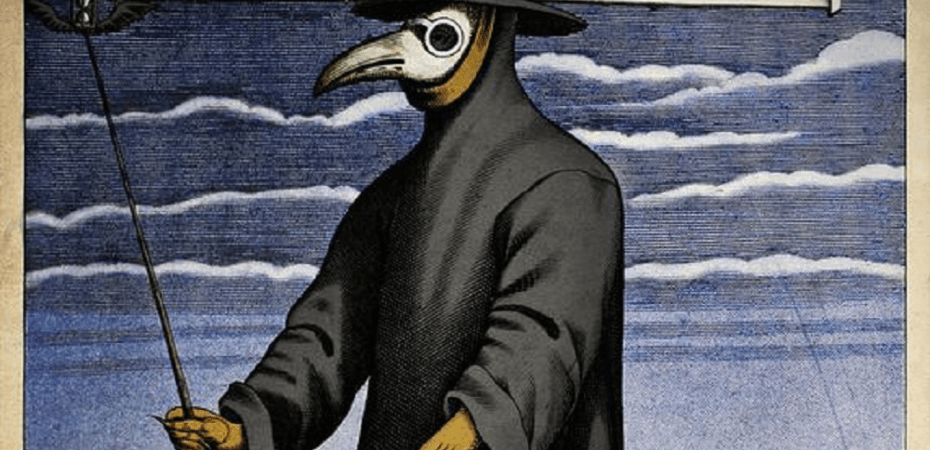
In Kühboden – also on the meadow and at Esch, near Starkenbach – all the remaining people ate at the same table after the plague. In Kühboden, one house was so contaminated that a hazel stick held to the window turned coal-black.
So many people died that one cow fell into seven hands in one night because of inheritance.
In Starkenbach, a large bell fell into four hands in one night.
In the monastery of St. Johann the disease left only two clergymen.
In the old Reformed cemetery, 20 youths were put to rest in a burial mound.
N. Senn, Diary.
Editor’s note: this story, along with others, refers to an object (cow/bell/haystack etc) falling into several hands in one night. I take this to mean that so many people within a family died so quickly that the no sooner had a family member inherited said object, then they died and the next in line received it – and with a lot of luck survived to tell the tale.
- Pest
Im Kühboden — auch auf der Wies und beim Esch, bei Starkenbach — assen nach der Pest alle Übriggebliebenen am nämlichen Tische. Im Kühboden war ein Haus so verpestet, dass ein Haselstecken, den man zum Fenster hineinhielt, kohlschwarz wurde.
Es starben so viele Leute, dass eine Kuh in einer Nacht wegen Erbschaft in sieben Hände fiel.
In Starkenbach fiel eine Grossschelle in einer Nacht in vier Hände.
Im Kloster St. Johann liess die Krankheit nur zwei Geistliche zurück.
Auf dem alten Friedhof der Reformierten ruhten unter einem Grabhügel 20 Jünglinge.
N. Senn, Tagebuch.
 Tales from the Swiss Mountains / Märchen aus den Schweizer Bergen